01 · A life in computing
The person behind the work
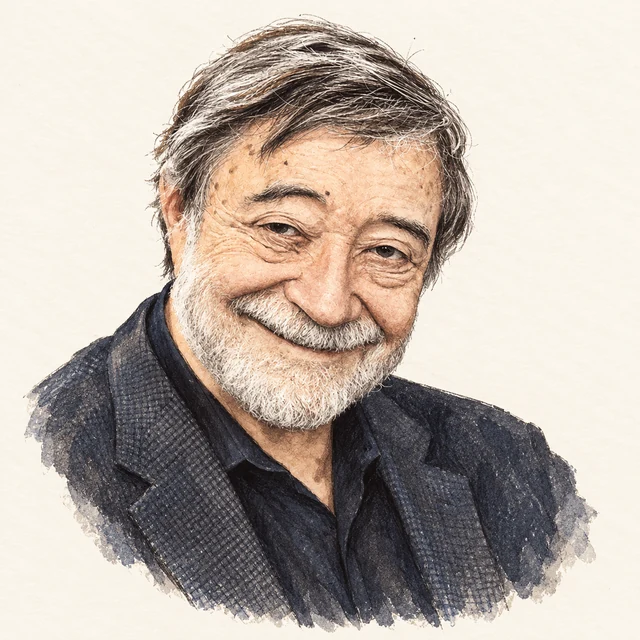
Judea Pearl developed frameworks for reasoning under uncertainty and for distinguishing association from causation. His work on Bayesian networks organized probabilistic dependencies through graphs, enabling efficient inference in complex models. He later developed graphical methods for causal reasoning and interventions. At UCLA, these ideas connected artificial intelligence with statistics and scientific explanation, helping researchers ask what would happen if a system were deliberately changed.
The contribution, explained
Judea Pearl developed mathematical tools for reasoning under uncertainty and about causation. A probabilistic graph can represent dependencies; a causal model adds assumptions about how changes propagate. This distinction lets us separate observing that two things occur together from predicting what an intervention would do.
Why it matters
Causal reasoning provides a structured language for analysing interventions, explanations and counterfactual questions.