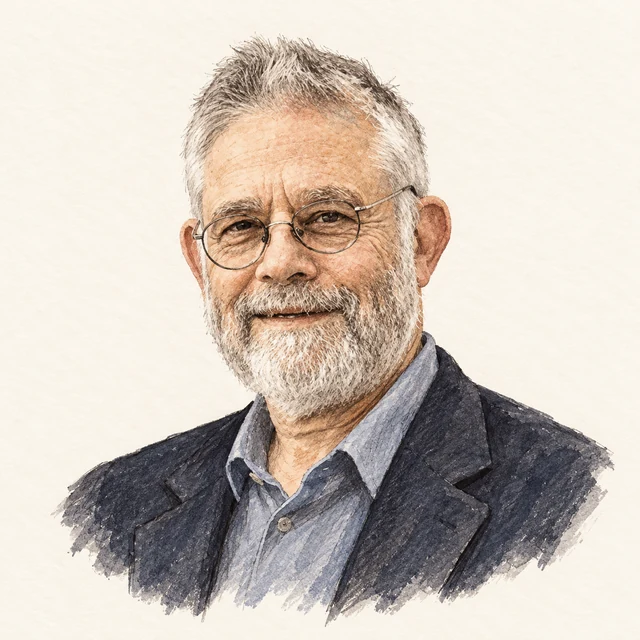
01 · A life in computing
The person behind the work
Manuel Blum developed deep ideas about the complexity and reliability of computation. His axiomatic approach clarified what it means to measure computational resources, while later work addressed program checking, pseudorandomness, and cryptography. At Berkeley, he helped build a strong community in theoretical computer science. His research repeatedly asked how limited computation can still provide useful guarantees, influencing both abstract theory and practical methods for trustworthy computing.
The contribution, explained
Manuel Blum developed fundamental results about computational complexity and brought those ideas into cryptography and program checking. A key theme is that understanding the resources a computation requires can be useful even when the goal is to verify or protect it rather than simply run it.
Why it matters
Theoretical limits and rigorous verification methods became tools for dependable and secure computing.