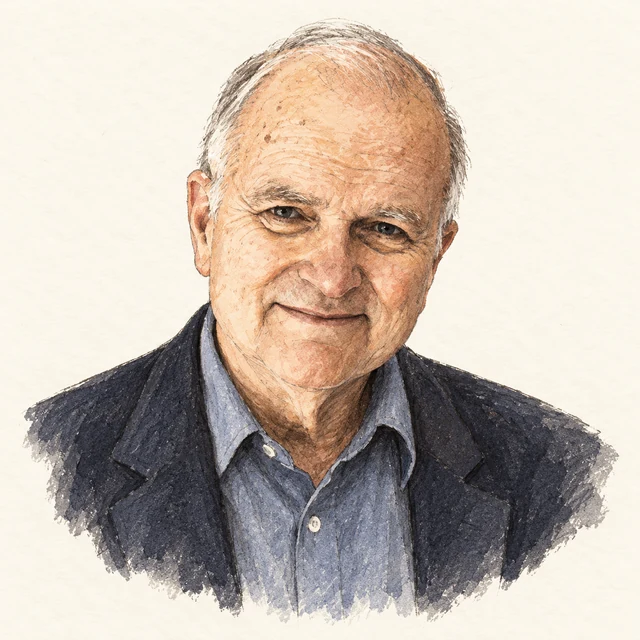
01 · A life in computing
The person behind the work
Richard Stearns co-developed the foundations of computational complexity theory with Juris Hartmanis while working at General Electric. Their research made time and space explicit mathematical resources for classifying computational problems. Stearns also worked on automata, algorithms, and game theory. He later taught at the University at Albany, where he helped build computer science research and education and served as department chair.
The contribution, explained
Juris Hartmanis and Richard Stearns established foundations for computational complexity theory. Instead of asking only whether a problem is computable, they examined the resources required as inputs grow. Their work helped show that allowing more computational time can genuinely increase what a machine can do.
Why it matters
Resource-based classes gave computer science a language for comparing problems and understanding computational limits.