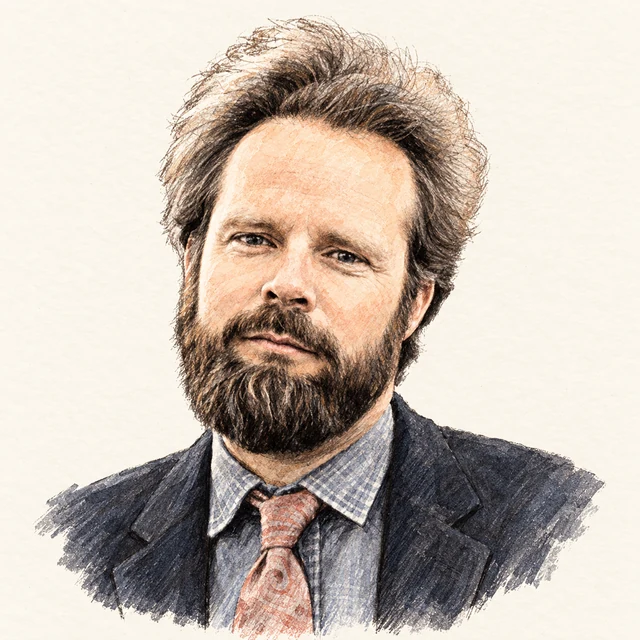
01 · A life in computing
The person behind the work
Robert Floyd helped make program correctness a subject of rigorous mathematical reasoning. He developed methods for attaching logical assertions to program steps and proving that a computation meets its specification. His research also included influential algorithms, parsing, and program synthesis. At Stanford he helped shape an approach to computer science in which efficient procedures and convincing arguments about their behavior develop together.
The contribution, explained
Robert Floyd helped give software construction a mathematical vocabulary. Assertions describe what should be true at particular points in a computation. By relating them to the operations a program performs, one can reason about correctness rather than rely only on observed runs. His contributions also reached parsing, semantics and algorithm analysis.
Why it matters
Program verification and precise language tools helped make reliable software a subject of systematic study.