01 · A life in computing
The person behind the work
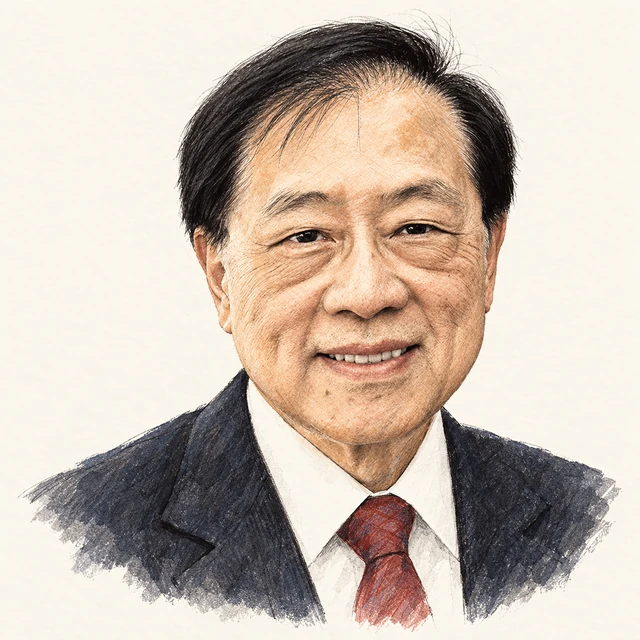
Andrew Yao developed foundational ideas across computational complexity, cryptography, and communication. His work gave precise ways to study pseudorandomness, the information exchanged during distributed computation, and secure computation between mutually distrustful parties. Trained in both physics and computer science, he held a professorship at Princeton when he received the 2000 award. His later work also helped build theoretical computer science education and research in China.
The contribution, explained
Andrew Yao developed foundations across the theory of computation, including communication complexity, pseudorandomness and cryptography. If two participants each hold part of an input, how much must they communicate to compute an answer? Such questions reveal limits that are not captured by counting processor operations alone.
Why it matters
Resource bounds help explain the possibilities of distributed computation and the security of cryptographic constructions.