01 · A life in computing
The person behind the work
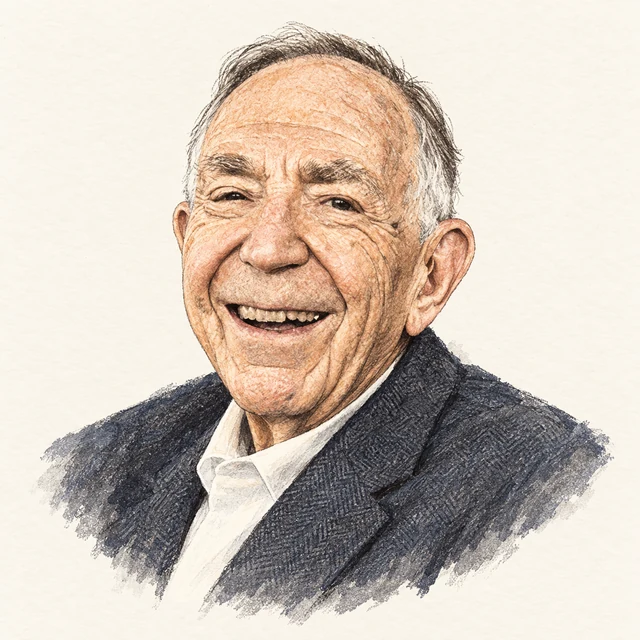
Edward Feigenbaum helped develop expert systems: programs that use explicitly represented specialist knowledge to solve difficult problems. At Stanford, projects such as DENDRAL showed how detailed knowledge of a domain could support useful machine reasoning. His work emphasized knowledge engineering, including how expertise is acquired, organized, and applied. He shared the award with Raj Reddy for their complementary contributions to large-scale artificial intelligence systems.
The contribution, explained
Edward Feigenbaum and Raj Reddy advanced large-scale artificial intelligence systems. Feigenbaum helped develop knowledge-based expert systems; Reddy pioneered work including speech understanding. Their research demonstrated that representing and applying domain knowledge could turn AI techniques into working systems beyond isolated laboratory puzzles.
Why it matters
Practical AI required choices about knowledge, search, uncertainty and integration with real environments.