c.curionodeThe Turing Archive

1987 · Computer systems

A simpler instruction set, a smarter compiler

Hardware and compiler design can make each other more effective.

1987Turing Award
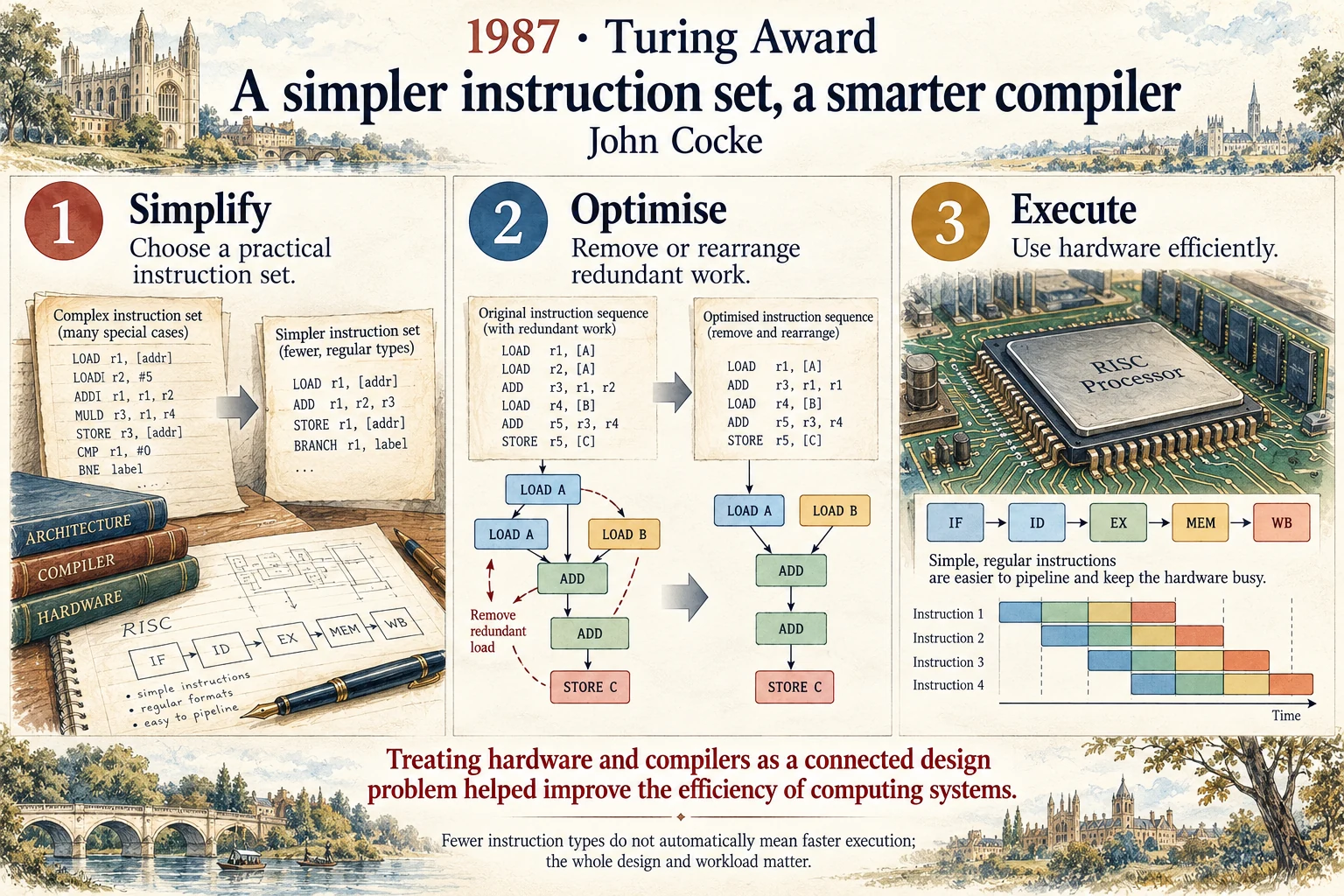
A simpler instruction set, a smarter compiler: Hardware and compiler design can make each other more effective.
Original AI-generated infographic by Curionode. Read the text version below for the full explanation.
Read the poster text
  1. Simplify

    Choose a practical instruction set.

  2. Optimise

    Remove or rearrange redundant work.

  3. Execute

    Use hardware efficiently.

Treating hardware and compilers as a connected design problem helped improve the efficiency of computing systems.

Fewer instruction types do not automatically mean faster execution; the whole design and workload matter.

01 · The idea

In everyday language

John Cocke contributed to compiler optimisation, large-system architecture and reduced instruction set computing. A processor with carefully chosen simple instructions can be paired with a compiler that arranges them effectively. His work also systematised transformations that remove redundant work while preserving a program’s meaning.

Why it matters

Treating hardware and compilers as a connected design problem helped improve the efficiency of computing systems.

02 · The people

Who brought the idea to life?

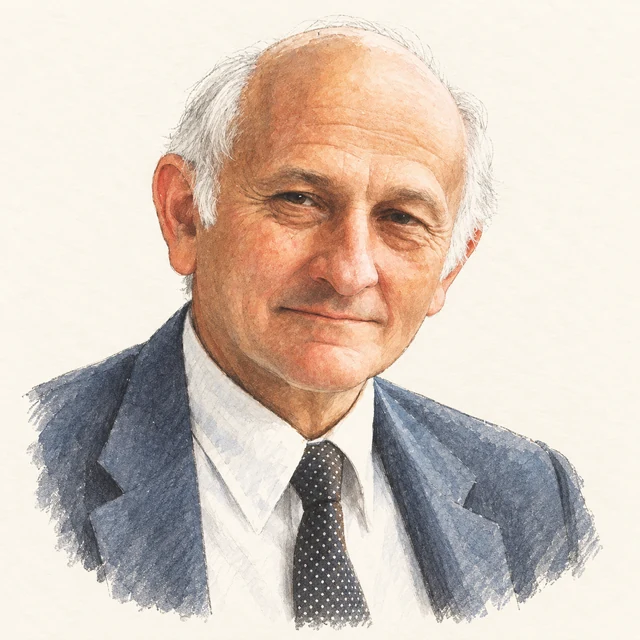
Illustrated portrait of John Cocke

John Cocke

John Cocke worked at IBM on the interaction between computer architecture and optimizing compilers. He helped develop reduced instruction set computing through the IBM 801 project, while also systematizing compiler transformations that eliminate unnecessary work and use machine resources more effectively. His research treated hardware and software as a connected design problem. The Turing Award recognized contributions to both compiler theory and large-system architecture.

Read the biography ↗

03 · Read further

From the original sources

Original explanations based on the official award record. The subject label is an editorial navigation aid.

  1. Official ACM profile: John Cocke ↗amturing.acm.org
  2. Heidelberg Laureate Forum: John Cocke ↗www.heidelberg-laureate-forum.org