c.curionodeThe Turing Archive

1989 · Theory & algorithms

Numbers that behave predictably

Floating-point arithmetic needs carefully designed rules as well as fast hardware.

1989Turing Award
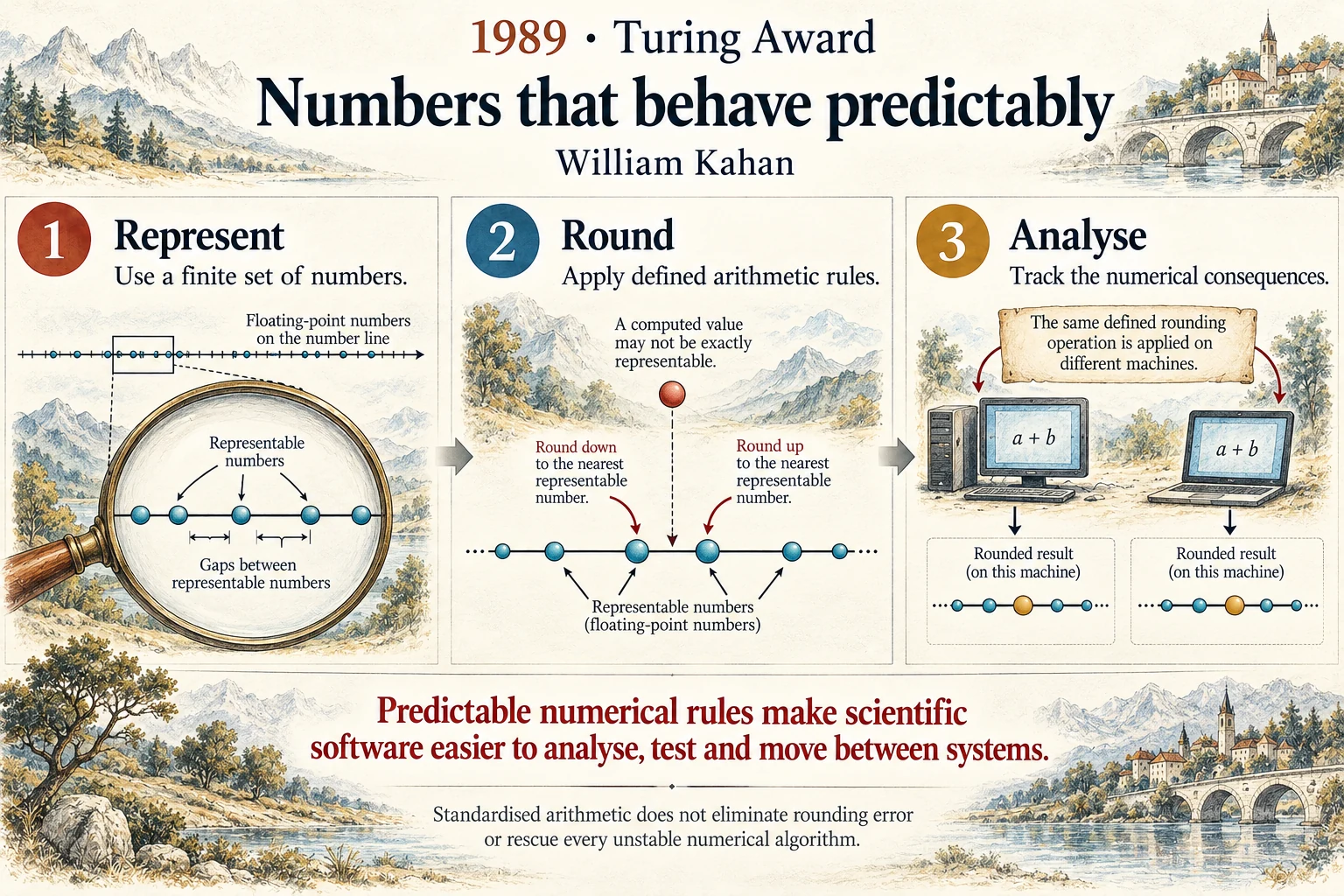
Numbers that behave predictably: Floating-point arithmetic needs carefully designed rules as well as fast hardware.
Original AI-generated infographic by Curionode. Read the text version below for the full explanation.
Read the poster text
  1. Represent

    Use a finite set of numbers.

  2. Round

    Apply defined arithmetic rules.

  3. Analyse

    Track the numerical consequences.

Predictable numerical rules make scientific software easier to analyse, test and move between systems.
Standardised arithmetic does not eliminate rounding error or rescue every unstable numerical algorithm.

01 · The idea

In everyday language

William Kahan helped make floating-point computation more dependable. Representable numbers have gaps, so arithmetic must round, and small choices can have large consequences. His work in numerical analysis and the development of IEEE floating-point standards helped establish consistent behaviour for a wide range of machines.

Why it matters

Predictable numerical rules make scientific software easier to analyse, test and move between systems.
02 · The people

Who brought the idea to life?

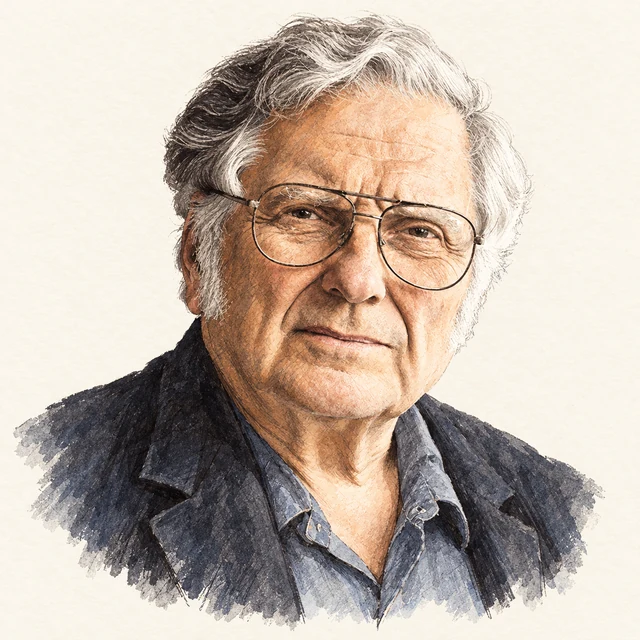
Illustrated portrait of William Kahan

William Kahan

William Kahan studied how finite-precision arithmetic can mislead otherwise sensible numerical calculations. He developed algorithms and analysis that expose rounding errors and reduce their consequences. At Berkeley, his work connected mathematics, software, and the design of floating-point hardware. He played a major role in shaping the IEEE floating-point standard, helping make numerical behavior more predictable and reliable across different computing systems.

Read the biography ↗

03 · Read further

From the original sources

Original explanations based on the official award record. The subject label is an editorial navigation aid.

  1. Official ACM profile: William Kahan ↗amturing.acm.org
  2. Heidelberg Laureate Forum: William Kahan ↗www.heidelberg-laureate-forum.org