01 · A life in computing
The person behind the work
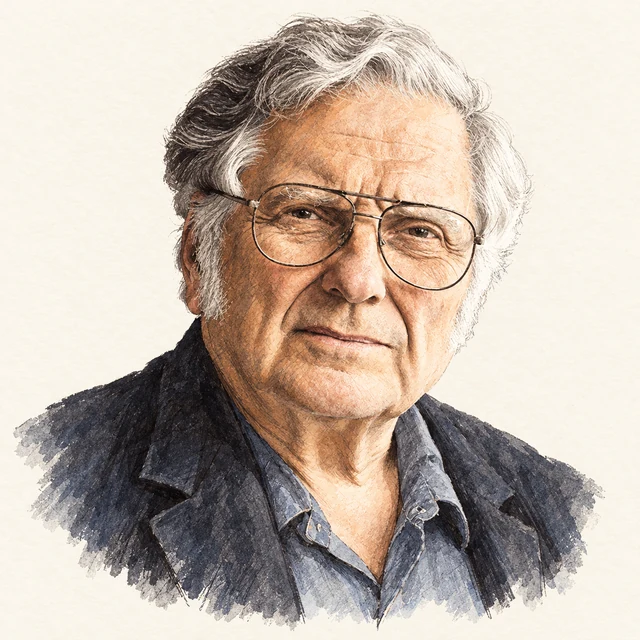
William Kahan studied how finite-precision arithmetic can mislead otherwise sensible numerical calculations. He developed algorithms and analysis that expose rounding errors and reduce their consequences. At Berkeley, his work connected mathematics, software, and the design of floating-point hardware. He played a major role in shaping the IEEE floating-point standard, helping make numerical behavior more predictable and reliable across different computing systems.
The contribution, explained
William Kahan helped make floating-point computation more dependable. Representable numbers have gaps, so arithmetic must round, and small choices can have large consequences. His work in numerical analysis and the development of IEEE floating-point standards helped establish consistent behaviour for a wide range of machines.
Why it matters
Predictable numerical rules make scientific software easier to analyse, test and move between systems.