c.curionodeThe Turing Archive

1990 · Computer systems

One computer, many conversations

Time-sharing made interactive computing available to multiple users.

1990Turing Award
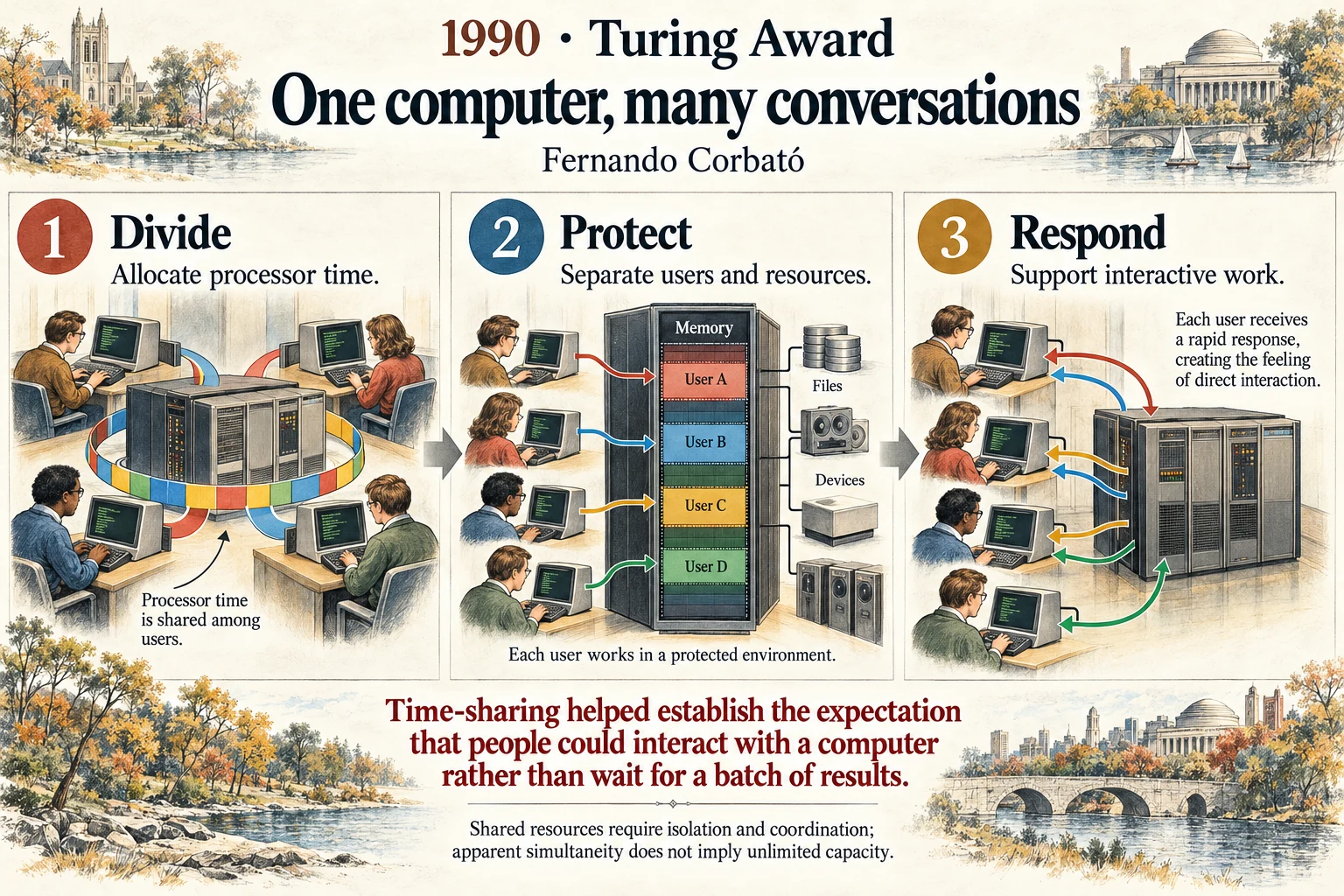
One computer, many conversations: Time-sharing made interactive computing available to multiple users.
Original AI-generated infographic by Curionode. Read the text version below for the full explanation.
Read the poster text
  1. Divide

    Allocate processor time.

  2. Protect

    Separate users and resources.

  3. Respond

    Support interactive work.

Time-sharing helped establish the expectation that people could interact with a computer rather than wait for a batch of results.

Shared resources require isolation and coordination; apparent simultaneity does not imply unlimited capacity.

01 · The idea

In everyday language

Fernando Corbató led work on CTSS and Multics, systems that shared a computer’s resources among users. By switching between tasks and managing memory, files and access, a machine could appear responsive to several people. The challenge was not just scheduling time but providing a coherent, protected environment.

Why it matters

Time-sharing helped establish the expectation that people could interact with a computer rather than wait for a batch of results.

02 · The people

Who brought the idea to life?

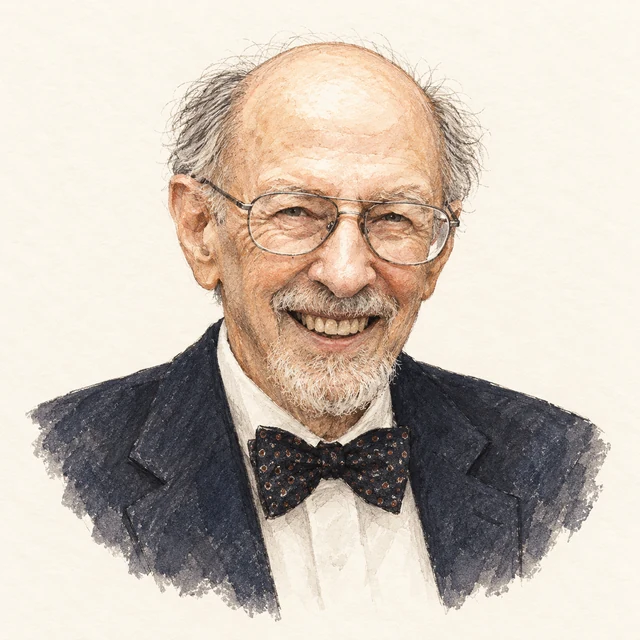
Illustrated portrait of Fernando Corbató

Fernando Corbató

Fernando Corbató led pioneering time-sharing projects at MIT that allowed many users to interact with one computer. The Compatible Time-Sharing System and Multics explored how operating systems could share resources while preserving useful working environments for individual users. His leadership joined technical architecture with the organization of ambitious software projects. These systems influenced later operating systems and the expectation that computing should be an interactive service.

Read the biography ↗

03 · Read further

From the original sources

Original explanations based on the official award record. The subject label is an editorial navigation aid.

  1. Official ACM profile: Fernando Corbató ↗amturing.acm.org
  2. Heidelberg Laureate Forum: Fernando Corbató ↗www.heidelberg-laureate-forum.org