c.curionodeThe Turing Archive

1967 · Computer systems

A program stored beside its data

EDSAC helped turn the stored-program idea into a working scientific tool.

1967Turing Award
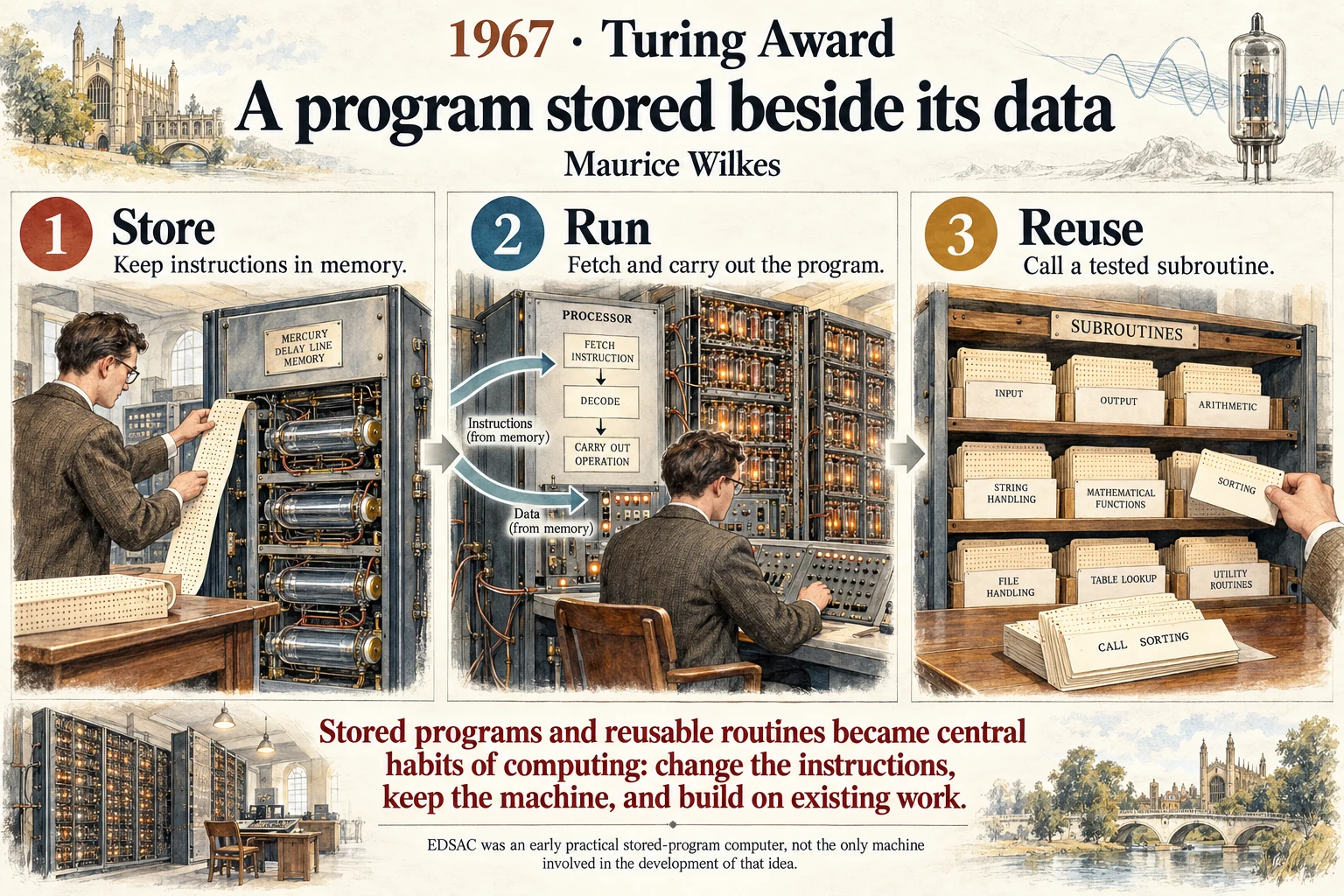
A program stored beside its data: EDSAC helped turn the stored-program idea into a working scientific tool.
Original AI-generated infographic by Curionode. Read the text version below for the full explanation.
Read the poster text
  1. Store

    Keep instructions in memory.

  2. Run

    Fetch and carry out the program.

  3. Reuse

    Call a tested subroutine.

Stored programs and reusable routines became central habits of computing: change the instructions, keep the machine, and build on existing work.

EDSAC was an early practical stored-program computer, not the only machine involved in the development of that idea.

01 · The idea

In everyday language

Maurice Wilkes led the construction of EDSAC at Cambridge, which ran its first programs in 1949. Instructions could be held in memory rather than set up by rewiring a machine for each task. Wilkes, David Wheeler and Stanley Gill also showed how a library of subroutines could make programming a practical, cumulative activity.

Why it matters

Stored programs and reusable routines became central habits of computing: change the instructions, keep the machine, and build on existing work.

02 · The people

Who brought the idea to life?

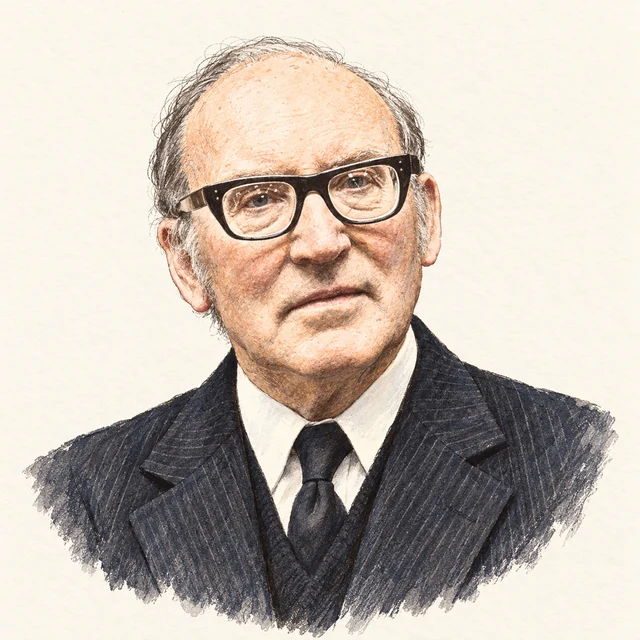
Illustrated portrait of Maurice Wilkes

Maurice Wilkes

Maurice Wilkes led the Cambridge team that built EDSAC, an early practical computer with instructions stored in memory. He also helped establish reusable program libraries with David Wheeler and Stanley Gill. His later work included microprogramming, which organized processor control through stored sequences of simpler operations. His career joined the construction of working machines with methods that made them easier to program.

Read the biography ↗

03 · Read further

From the original sources

Original explanations based on the official award record. The subject label is an editorial navigation aid.

  1. Official ACM profile: Maurice Wilkes ↗amturing.acm.org
  2. Heidelberg Laureate Forum: Maurice Wilkes ↗www.heidelberg-laureate-forum.org