c.curionodeThe Turing Archive

1971 · Artificial intelligence

Programs that manipulate ideas

Lisp made symbolic expressions into material a program could work with.

1971Turing Award
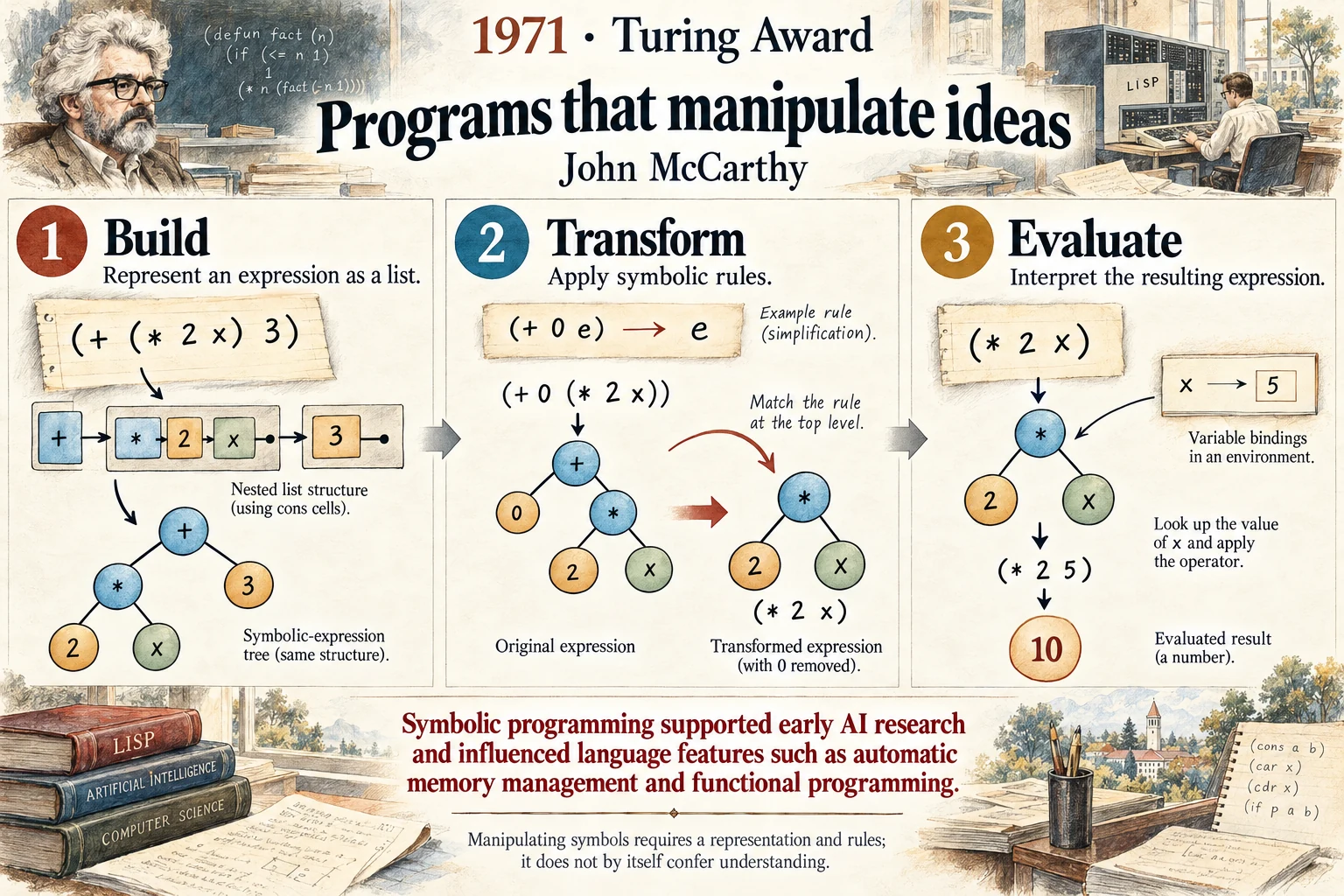
Programs that manipulate ideas: Lisp made symbolic expressions into material a program could work with.
Original AI-generated infographic by Curionode. Read the text version below for the full explanation.
Read the poster text
  1. Build

    Represent an expression as a list.

  2. Transform

    Apply symbolic rules.

  3. Evaluate

    Interpret the resulting expression.

Symbolic programming supported early AI research and influenced language features such as automatic memory management and functional programming.

Manipulating symbols requires a representation and rules; it does not by itself confer understanding.

01 · The idea

In everyday language

John McCarthy helped found artificial intelligence and developed Lisp, a language built around symbolic expressions and lists. Instead of processing only numerical measurements, a program could manipulate structures representing rules, expressions and other programs. This provided a lasting language for exploring machine reasoning.

Why it matters

Symbolic programming supported early AI research and influenced language features such as automatic memory management and functional programming.

02 · The people

Who brought the idea to life?

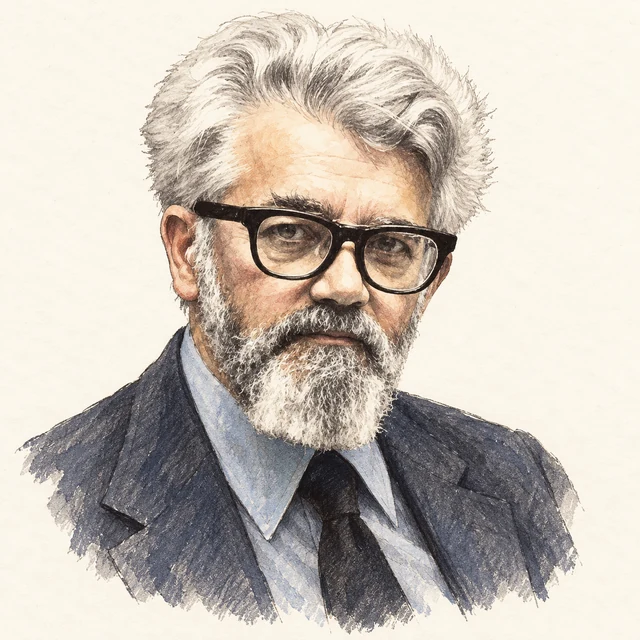
Illustrated portrait of John McCarthy

John McCarthy

John McCarthy helped define artificial intelligence as a field and developed Lisp, a programming language closely associated with symbolic AI research. At Stanford he pursued the formal representation of knowledge and common-sense reasoning. He also advocated time-sharing, allowing many people to use one computer interactively. His work linked ambitious questions about machine intelligence with languages and computing infrastructure that researchers could actually use.

Read the biography ↗

03 · Read further

From the original sources

Original explanations based on the official award record. The subject label is an editorial navigation aid.

  1. Official ACM profile: John McCarthy ↗amturing.acm.org
  2. Heidelberg Laureate Forum: John McCarthy ↗www.heidelberg-laureate-forum.org